

If you have spent any time researching cryptocurrency markets, you have likely encountered terms like inflow, outflow, and netflow. These on-chain metrics are among the most powerful tools for understanding market sentiment and predicting potential price movements. But what do they actually mean, and how can you use them in your analysis?
This comprehensive guide explains everything you need to know about exchange flow metrics. We will break down each concept, show you how to interpret the data, and explain why professional traders and analysts pay close attention to these indicators when making investment decisions.
Understanding flow data is essential for anyone serious about cryptocurrency analysis. Unlike price charts that show you what has already happened, flow metrics can provide early signals about what market participants are planning to do next.
Key Takeaways
- 1.Inflow = crypto moving INTO exchanges (potential selling pressure)
- 2.Outflow = crypto moving OUT OF exchanges (accumulation signal)
- 3.Netflow = Inflow minus Outflow (overall market sentiment)
- 4.Negative netflow is generally bullish (more leaving than entering)
- 5.Positive netflow is generally bearish (more entering than leaving)
In This Guide
Why Exchange Flows Matter
To understand why exchange flows are important, you first need to understand a fundamental aspect of cryptocurrency trading: you can only sell crypto on an exchange if it is already deposited there.
Unlike traditional stock markets where shares are held by brokers, cryptocurrency can be stored in personal wallets completely outside the exchange ecosystem. This creates a unique dynamic where the movement of coins between personal wallets and exchanges provides genuine insight into investor intentions.
When someone moves Bitcoin or Ethereum to an exchange, they are usually preparing to sell or trade. When they withdraw from an exchange to a personal wallet, they are typically planning to hold long-term. This simple logic forms the foundation of flow analysis.
Think of it this way: Exchange flows are like watching foot traffic at a shopping mall. If lots of people are entering with full wallets and leaving with empty bags, you know they are spending money. If people are leaving with full bags and not many are entering, the mall is losing inventory. The same logic applies to crypto exchanges.
What is Cryptocurrency Inflow?
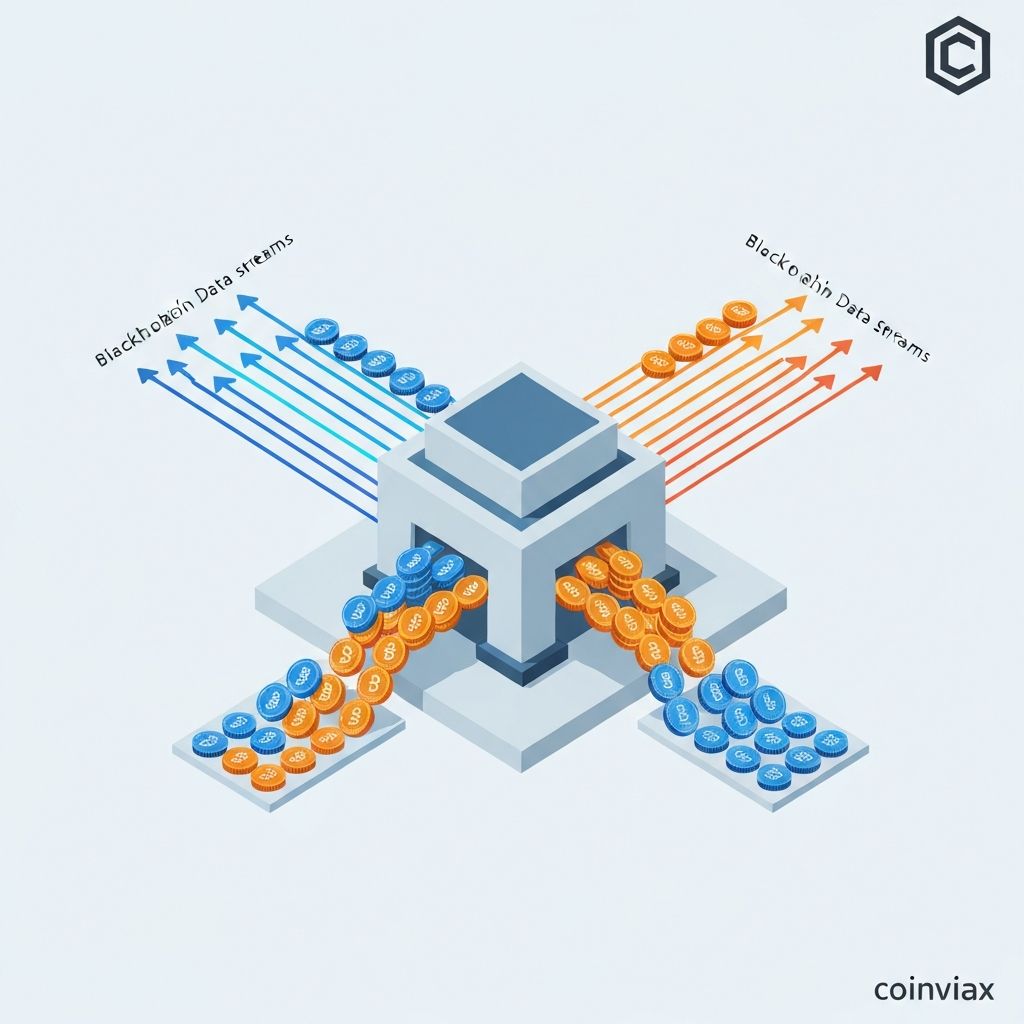
Inflow refers to the total amount of cryptocurrency being deposited into exchange wallets from external addresses. When you see "Bitcoin Exchange Inflow: 15,000 BTC" on an analytics platform, it means 15,000 Bitcoin was transferred to exchange deposit addresses during that time period.
Why Do People Deposit to Exchanges?
- To sell: The most common reason - converting crypto to fiat or stablecoins
- To trade: Swapping one cryptocurrency for another
- To use as collateral: For margin trading or lending
- To stake: Some exchanges offer staking services
- To participate in events: IEOs, launchpads, or promotions
! High Inflow Signal
High inflows are generally considered bearish. When large amounts of crypto flow into exchanges, it suggests holders are preparing to sell. This increases the available supply on exchanges, which can put downward pressure on prices. Sustained high inflows often precede price corrections.
Inflow Metrics to Watch
| Metric | Description | Significance |
|---|---|---|
| Total Inflow | Sum of all deposits to exchanges | Overall selling pressure indicator |
| Inflow Mean | Average deposit size | Retail vs whale activity |
| Inflow Top 10 | Largest 10 deposits | Major holder movements |
| Inflow Count | Number of deposit transactions | Market participation breadth |
What is Cryptocurrency Outflow?
Outflow is the opposite of inflow - it measures the total amount of cryptocurrency being withdrawn from exchanges to external wallets. When users withdraw crypto from an exchange, they are typically moving it to personal custody for long-term holding.
Why Do People Withdraw from Exchanges?
- Long-term holding (HODLing): Moving to cold storage for security
- Self-custody preference: "Not your keys, not your coins"
- DeFi participation: Using tokens in decentralized protocols
- Privacy: Reducing exchange exposure and data collection
- Earning yield: Staking or providing liquidity elsewhere
+ High Outflow Signal
High outflows are generally considered bullish. When crypto leaves exchanges, it reduces the available supply that can be sold. This suggests investors are confident enough to move to self-custody, indicating they expect prices to rise. Sustained outflows often precede or accompany bull markets.
What is Cryptocurrency Netflow?
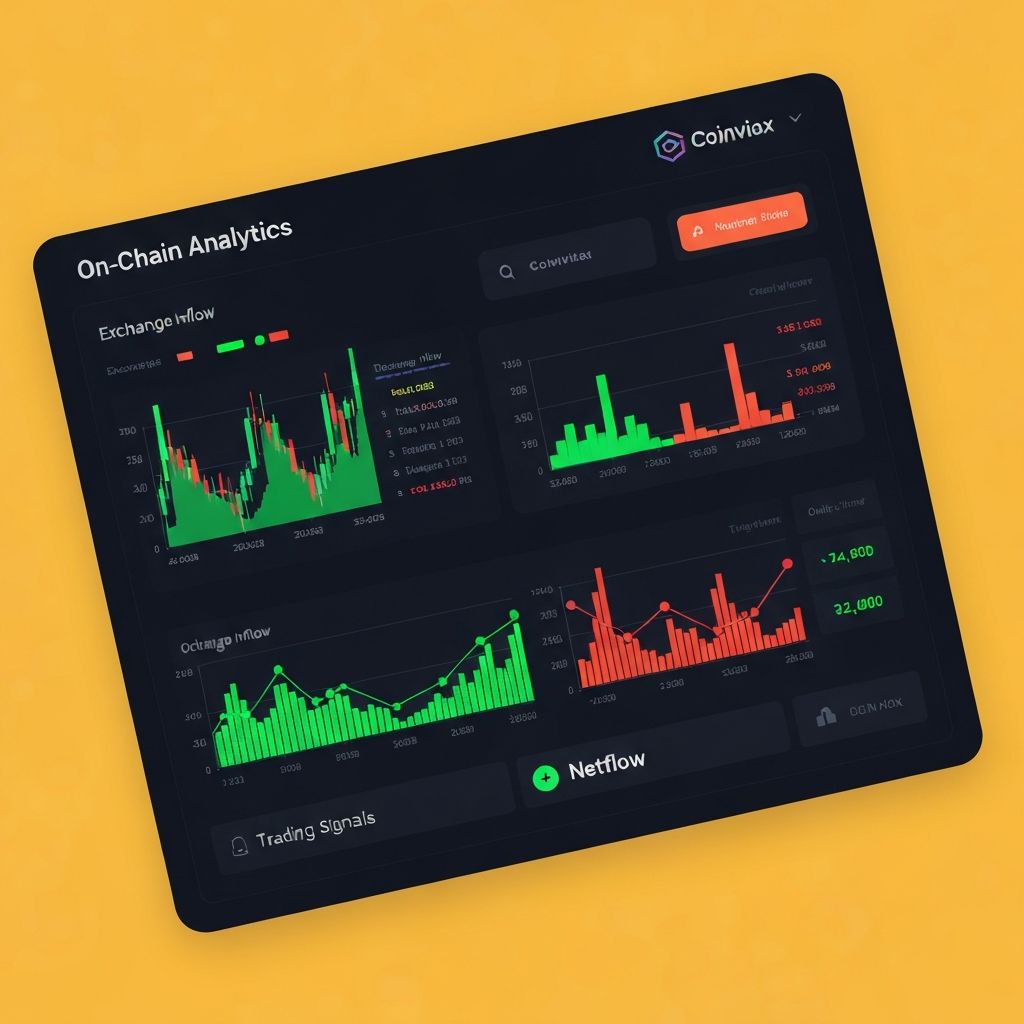
Netflow is the most important of the three metrics. It is simply the difference between inflow and outflow:
Netflow = Inflow − Outflow
A single number that tells you the net direction of crypto movement
Interpreting Netflow Values
Positive Netflow (+)
More crypto entering exchanges than leaving
- • Inflow > Outflow
- • Suggests selling pressure
- • Generally bearish signal
- • Exchange reserves increasing
Negative Netflow (−)
More crypto leaving exchanges than entering
- • Outflow > Inflow
- • Suggests accumulation
- • Generally bullish signal
- • Exchange reserves decreasing
Quick Reference: Flow Signals
| Scenario | Inflow | Outflow | Netflow | Interpretation |
|---|---|---|---|---|
| Strong Accumulation | Low | High | Large Negative | Very Bullish |
| Mild Accumulation | Medium | Medium-High | Negative | Bullish |
| Neutral/Balanced | Equal | Equal | ~Zero | Neutral |
| Mild Distribution | Medium-High | Medium | Positive | Bearish |
| Strong Distribution | High | Low | Large Positive | Very Bearish |
How to Interpret Flow Data Correctly
While the basic interpretation of flows is straightforward, there are important nuances to consider. Flow data is most valuable when combined with other metrics and analysed in context.
Context Matters
Compare to Historical Averages
A "high" inflow of 10,000 BTC might be normal during a bull market but extremely significant during a quiet period. Always compare current flows to historical averages for that asset.
Look at Trends, Not Single Data Points
One day of high inflows does not make a trend. Look for sustained patterns over days or weeks. A single large transfer could be an exchange moving funds internally.
Consider the Price Context
Outflows during a price dip suggest buying the dip (bullish). Outflows at all-time highs might indicate profit-taking preparation. Inflows after a large gain often precede corrections.
Check Multiple Exchanges
Flows concentrated on one exchange might indicate exchange-specific events (maintenance, promotions, security concerns). Broad-based flows across many exchanges are more meaningful.
Whale Flows Explained
Whale flows are a subset of exchange flows that specifically track large transactions. While the exact threshold varies by platform, whale transactions typically involve transfers of $100,000 to $1 million or more.

Whale activity is particularly important because large holders can significantly impact market prices. A single whale depositing 1,000 BTC to an exchange creates more potential selling pressure than 1,000 retail investors depositing 1 BTC each, even though the total is the same.
Types of Whale Flow Alerts
| Alert Type | Description | Typical Interpretation |
|---|---|---|
| Whale → Exchange | Large deposit from whale wallet to exchange | Potential selling, bearish signal |
| Exchange → Whale | Large withdrawal from exchange to whale wallet | Accumulation, bullish signal |
| Whale → Whale | Transfer between unknown wallets | OTC deal or wallet reorganization |
| Exchange → Exchange | Transfer between exchanges | Arbitrage or exchange rebalancing |
Important: Not all whale-to-exchange transfers result in immediate selling. Sometimes whales deposit to exchanges for trading, lending, or other activities. Watch for actual selling activity in the order books following large deposits.
Where to Track Exchange Flows
Several on-chain analytics platforms provide exchange flow data. Here are the most popular options for tracking inflows, outflows, and netflow:
| Platform | Free Tier | Paid Plans | Best For |
|---|---|---|---|
| CryptoQuant | Limited charts | From $39/month | Professional traders, alerts |
| Glassnode | Basic metrics | From $39/month | In-depth Bitcoin analysis |
| Santiment | Limited access | From $49/month | Social + on-chain data |
| IntoTheBlock | Basic indicators | From $10/month | Beginners, affordable |
| Whale Alert | Twitter/Telegram | API access paid | Real-time whale alerts |
| Nansen | Very limited | From $150/month | Ethereum/DeFi focus |
Real-World Examples of Flow Analysis
Understanding how flow data has played out in real market scenarios helps illustrate its practical value. Here are notable historical examples:
Example 1: The 2021 Bull Run Accumulation
Throughout late 2020 and early 2021, Bitcoin saw sustained negative netflow as institutional investors and long-term holders withdrew coins from exchanges. Exchange reserves dropped from over 3 million BTC to under 2.5 million BTC. This coincided with Bitcoin rising from $10,000 to $60,000+.
Example 2: May 2021 Crash Warning Signs
In the weeks before the May 2021 crash, on-chain analysts observed increasing exchange inflows and positive netflow. Long-term holders began moving coins to exchanges, and whale deposits increased. Shortly after, Bitcoin dropped from $58,000 to $30,000.
Example 3: FTX Collapse Outflows
Following the FTX collapse in November 2022, exchanges saw record outflows as users rushed to self-custody. While this was driven by fear rather than bullish sentiment, it demonstrated how external events can dramatically impact flow data. The lesson: always consider the broader context.
Limitations and Caveats
While flow data is valuable, it is not a crystal ball. Understanding its limitations helps you use it more effectively:
Internal Transfers
Exchanges move funds between hot and cold wallets regularly. These internal transfers can appear as inflows or outflows but do not represent user activity.
Timing Delays
Depositing crypto does not mean immediate selling. There can be hours, days, or weeks between a deposit and actual trading activity.
DEX Activity
Flow metrics typically track centralised exchanges. Activity on decentralised exchanges (DEXs) is not captured in traditional flow data.
OTC Trades
Large over-the-counter (OTC) trades between institutions may not flow through exchanges at all, missing significant market activity.
Stablecoin Flows
Stablecoin inflows to exchanges can indicate buying interest (bullish), the opposite of crypto inflows. Always differentiate between assets.
Market Structure Changes
As more trading moves to futures, options, and DeFi, spot exchange flows become less representative of overall market activity.
Using Flows in Your Trading Strategy
Now that you understand what flow metrics mean, here is how to incorporate them into your analysis:
Best Practices for Flow Analysis
- Use flows as confirmation, not primary signals: Combine with price action, volume, and other indicators
- Track multiple timeframes: Look at hourly, daily, and weekly flow data for different perspectives
- Set up alerts: Use platforms like CryptoQuant to notify you of unusual flow activity
- Compare across assets: Bitcoin flows often lead altcoin movements
- Watch exchange reserves: Long-term trends in total exchange holdings provide macro context
- Differentiate asset types: Crypto inflows vs stablecoin inflows have opposite implications
Flow-Based Trading Scenarios
| Scenario | Flow Signal | Price Action | Potential Strategy |
|---|---|---|---|
| Accumulation | Sustained negative netflow | Consolidating or rising | Look for long entries |
| Distribution | Sustained positive netflow | At highs or declining | Reduce exposure, set stops |
| Buying the Dip | Outflows during price drop | Sharp decline | Watch for reversal signals |
| Profit Taking | Inflows at highs | After large rally | Consider taking profits |
Conclusion
Understanding inflow, outflow, and netflow gives you valuable insight into what cryptocurrency market participants are actually doing with their coins. These on-chain metrics provide a window into investor behaviour that traditional price charts cannot show.
Remember the key principles: high inflows suggest selling pressure (bearish), high outflows indicate accumulation (bullish), and netflow combines both into a single directional signal. Negative netflow is generally bullish, while positive netflow is generally bearish.
However, flow data should never be used in isolation. Combine it with price analysis, volume data, market structure, and other on-chain metrics for a more complete picture. And always consider the broader context - unusual events like exchange collapses or regulatory news can distort normal flow patterns.
As you develop your cryptocurrency analysis skills, exchange flow metrics will become an increasingly valuable tool in your arsenal for understanding market sentiment and anticipating potential price movements.
Continue Learning
Explore more guides to deepen your cryptocurrency knowledge.
