

In the fast-moving world of cryptocurrency, few threats are as devastating to investors as the rug pull scam. This deceptive practice has cost investors billions of dollars and represents one of the most significant risks in the decentralized finance (DeFi) ecosystem. Understanding what rug pulls are, how they work, and how to protect yourself is essential for anyone participating in cryptocurrency markets.
Critical Warning
According to blockchain analytics firm Chainalysis, rug pulls accounted for over $2.8 billion in cryptocurrency theft in 2021 alone, representing 37% of all cryptocurrency scam revenue that year.
What Is a Rug Pull in Cryptocurrency?
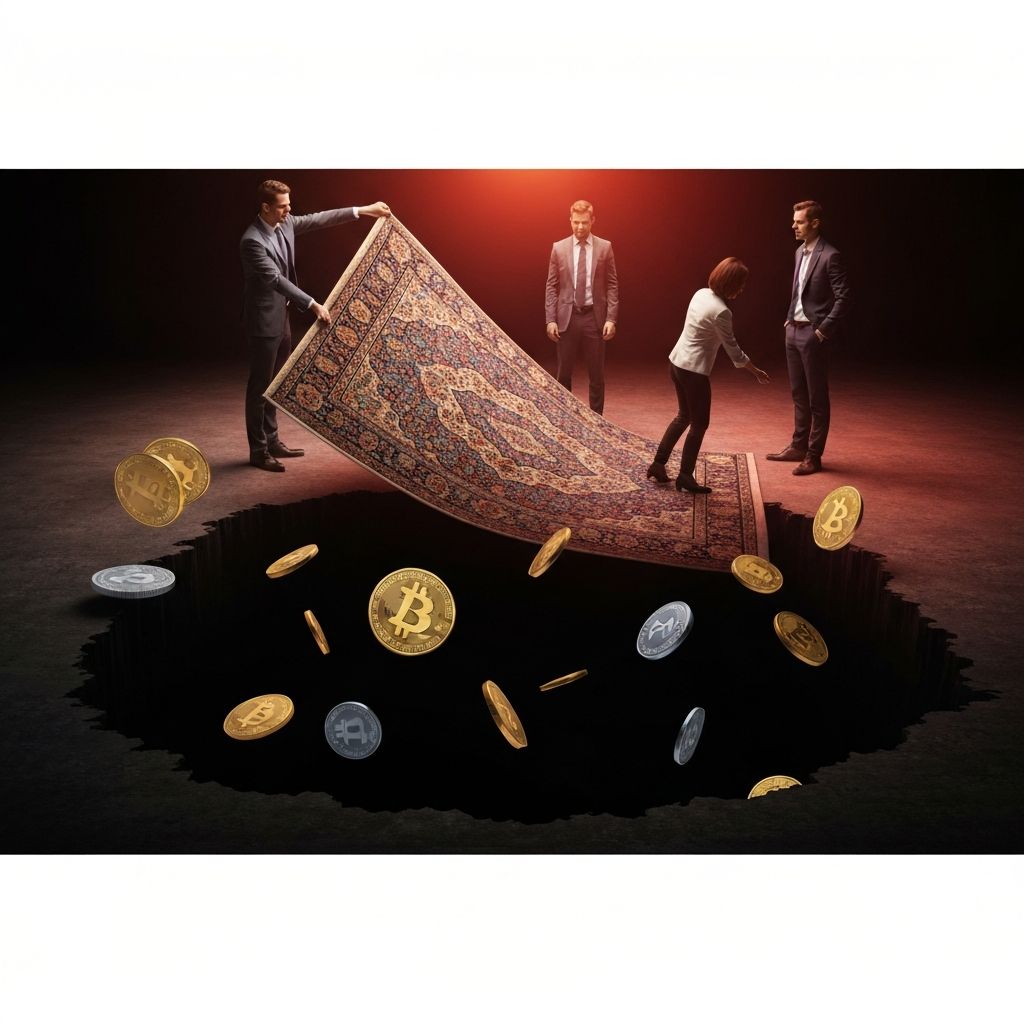
A rug pull is a type of cryptocurrency scam where developers abandon a project and run away with investors' funds. The term comes from the expression "pulling the rug out from under someone," which perfectly describes what happens: just when investors think they're standing on solid ground, the foundation is suddenly yanked away, leaving them with worthless tokens and significant financial losses.
Rug pulls typically occur in the DeFi space and involve newly created tokens listed on decentralized exchanges (DEXs) like Uniswap or PancakeSwap. Unlike centralized exchanges that verify projects before listing, DEXs allow anyone to create and list tokens without any vetting process, making them prime hunting grounds for scammers.
Rug Pull Definition
A rug pull is a malicious maneuver in cryptocurrency where project developers abandon their project after attracting investment, either by draining liquidity pools, selling off their token holdings, or exploiting code vulnerabilities, leaving investors with worthless assets.
How Does a Rug Pull Work?
Understanding the mechanics of rug pulls is crucial for recognizing and avoiding them. These scams follow a predictable pattern that exploits both technical vulnerabilities and human psychology. Here's how the typical rug pull unfolds:
Token Creation
Scammers create a new cryptocurrency token, often with an appealing name, professional-looking website, and compelling whitepaper that promises revolutionary technology or massive returns.
Liquidity Pool Setup
The token is listed on a DEX by creating a liquidity pool, typically pairing the new token with ETH or another established cryptocurrency to enable trading.
Aggressive Marketing
Scammers promote the project through social media, paid influencers, fake partnerships, and artificial trading volume to create FOMO (fear of missing out) among potential investors.
The Exit
Once enough investors have bought in, scammers execute their exit strategy: draining liquidity, selling holdings, or exploiting code to steal all invested funds.
Types of Rug Pulls
Not all rug pulls are executed in the same way. Understanding the different types can help you recognize potential threats before they materialize. Rug pulls generally fall into two main categories: hard rug pulls (illegal) and soft rug pulls (unethical but potentially legal).
| Type | Method | Legal Status | Detection Difficulty |
|---|---|---|---|
| Liquidity Stealing | Developers drain the liquidity pool | Illegal | Moderate |
| Limiting Sell Orders | Code prevents investors from selling | Illegal | Hard (requires code audit) |
| Dumping | Developers sell large token holdings | Gray Area | Moderate |
| Slow Rug | Gradual abandonment over time | Gray Area | Very Hard |
Hard Rug Pulls
Hard rug pulls involve malicious code or outright theft and are clearly illegal. These include:
Liquidity Stealing: The most common form of hard rug pull occurs when developers remove all the paired cryptocurrency (ETH, BNB, etc.) from the liquidity pool. Since the scam token has no inherent value and cannot be exchanged without liquidity, investors are left holding worthless tokens. Smart developers often include backdoors in their contracts that allow them to bypass liquidity locks.
Limiting Sell Orders: Some malicious smart contracts contain hidden code that allows only the developers' wallets to sell tokens. Investors can buy but never sell, effectively trapping their funds while the price artificially rises, allowing developers to cash out at peak prices.
Soft Rug Pulls
Soft rug pulls are more subtle and may not technically be illegal, though they are certainly unethical:
Token Dumping: Developers or early investors hold a large percentage of the total token supply. After the price rises due to marketing and hype, they sell their entire holdings at once, causing the price to crash. While this resembles legitimate profit-taking, it becomes a rug pull when developers have no intention of continuing the project.
Slow Rugs: Also known as "soft exits," these occur when developers gradually reduce their involvement, stop delivering on roadmap promises, and slowly sell off their holdings. The project fades away over months rather than collapsing overnight, making it harder to identify as a scam.
Warning Signs of a Potential Rug Pull
While no single indicator definitively proves a project is a scam, certain red flags should raise serious concerns. Learning to identify these warning signs can help you avoid becoming a victim.
Key Warning Signs to Watch For
- • Anonymous team: Legitimate projects typically have publicly identifiable founders with verifiable backgrounds
- • No liquidity lock: Unlocked liquidity means developers can drain funds at any time
- • Unrealistic promises: Guaranteed returns or claims of being the "next Bitcoin" are major red flags
- • Concentrated token ownership: If few wallets hold most tokens, a dump is likely
- • Unaudited smart contracts: No third-party security audit suggests hidden vulnerabilities
- • Excessive hype and FOMO marketing: Pressure tactics designed to rush investment decisions
Team and Project Transparency
Anonymous or unverifiable teams represent one of the biggest red flags. While privacy is valued in crypto, legitimate projects typically have founders willing to stake their reputation on the project's success. Research team members on LinkedIn, verify their claimed experience, and check if they have a history in the blockchain space.
Be especially wary of projects that use stock photos for team members or have social media profiles created recently with no history. Reverse image searches can often reveal stolen photographs.
Tokenomics Red Flags
Poor token distribution is a critical warning sign. Use blockchain explorers to check how tokens are distributed. If a small number of wallets (especially those not designated as exchange wallets) hold a significant percentage of the supply, the risk of a coordinated dump is high.
Additionally, examine the vesting schedule for team tokens. Legitimate projects typically lock team allocations for extended periods with gradual release schedules. If founders can access all their tokens immediately, they have every incentive to dump and disappear.
Technical Warning Signs
Unverified or unaudited smart contracts should always raise concerns. Reputable projects have their code audited by established security firms like CertiK, Trail of Bits, or OpenZeppelin. An audit doesn't guarantee safety, but its absence suggests the developers either don't want scrutiny or don't take security seriously.
Check if the contract source code is verified on Etherscan or similar block explorers. Unverified contracts make it impossible to inspect the code for malicious functions like mint capabilities, hidden fees, or sell restrictions.
Notorious Rug Pull Examples
Learning from past rug pulls provides valuable insight into how these scams operate and the scale of damage they can cause.
| Project | Year | Amount Stolen | Method |
|---|---|---|---|
| OneCoin | 2014-2017 | $4+ Billion | Ponzi scheme disguised as crypto |
| Thodex | 2021 | $2 Billion | Exchange exit scam |
| AnubisDAO | 2021 | $60 Million | Liquidity drain |
| Squid Game Token | 2021 | $3.4 Million | Sell restriction + dump |
| Frosties NFT | 2022 | $1.3 Million | NFT project abandonment |
The Squid Game Token case is particularly instructive. Capitalizing on the popularity of the Netflix series, the token surged 75,000% before crashing to near zero when developers drained the liquidity pool. Investors discovered they couldn't sell due to hidden "anti-dump" mechanisms in the smart contract, which only allowed the developers to exit.
How to Protect Yourself from Rug Pulls
While the DeFi space carries inherent risks, following established due diligence practices can significantly reduce your exposure to rug pulls. Here are comprehensive strategies to protect your investments.
Conduct Thorough Research (DYOR)
Do Your Own Research is the most important principle in cryptocurrency investing. Never invest based solely on social media hype, influencer recommendations, or fear of missing out. Take time to investigate every aspect of a project before committing funds.
Verify team identities before investing
Minimum research time for any new project
Maximum portfolio allocation to high-risk assets
Verify Liquidity Locks
Check whether the project has locked its liquidity and for how long. Liquidity locks prevent developers from immediately withdrawing funds from the liquidity pool. Use tools like Unicrypt or Team.Finance to verify lock status. A lock of at least 6-12 months is generally considered a minimum standard.
However, understand that liquidity locks are not foolproof. Sophisticated scammers have found ways to circumvent locks or may simply wait until the lock expires. Never consider a liquidity lock as a guarantee of safety.
Review Smart Contract Audits
Look for third-party smart contract audits from reputable security firms. Read the full audit report, not just the summary. Pay attention to any flagged issues and verify they've been addressed. Be aware that some scammers create fake audit reports or pay for superficial audits from unknown firms.
Use Token Analysis Tools
Several tools can help you analyze tokens for potential red flags:
| Tool | Purpose | Key Features |
|---|---|---|
| Token Sniffer | Contract analysis | Scam detection, audit scores |
| RugDoc | DeFi project reviews | Risk ratings, honeypot detection |
| DEXTools | Trading analysis | Holder distribution, liquidity info |
| Etherscan/BscScan | Blockchain explorers | Contract verification, holder analysis |
Practice Safe Investment Habits
Beyond researching individual projects, adopt these general safety practices:
- • Never invest more than you can afford to lose in any single high-risk project
- • Use a separate wallet for interacting with new or unverified projects
- • Be skeptical of guaranteed returns or promises that sound too good to be true
- • Wait for projects to mature before investing rather than chasing launches
- • Revoke token approvals after interacting with DeFi protocols
What to Do If You Suspect a Rug Pull
If you believe you've identified a potential rug pull or have already been victimized, take these steps:
Immediate Actions
- 1. Try to exit your position if selling is still possible. Even a partial recovery is better than total loss.
- 2. Document everything including transaction hashes, wallet addresses, screenshots, and communications.
- 3. Revoke token approvals immediately to prevent further unauthorized access to your wallet.
- 4. Report the scam to relevant authorities, exchanges, and blockchain security companies.
- 5. Warn others by posting about your experience on social media and crypto forums.
While recovering funds from a rug pull is extremely difficult, reporting scams helps build awareness and may assist law enforcement in tracking down perpetrators. Some jurisdictions have successfully prosecuted rug pull operators, including the Frosties NFT case where the Department of Justice charged two individuals with wire fraud and money laundering.
The Regulatory Landscape
Regulators worldwide are increasingly focusing on cryptocurrency fraud, including rug pulls. The SEC in the United States, FCA in the United Kingdom, and similar bodies in other jurisdictions have taken action against fraudulent crypto projects.
While buying cryptocurrency from regulated exchanges offers more protection, the decentralized nature of DeFi means many rug pulls occur outside traditional regulatory reach. This underscores the importance of personal due diligence and risk management.
The cryptocurrency industry is also developing self-regulatory solutions, including decentralized identity verification, on-chain reputation systems, and insurance protocols designed to protect DeFi users from various forms of fraud.
Conclusion
Rug pulls represent a significant threat in the cryptocurrency ecosystem, particularly within the DeFi space where permissionless innovation coexists with minimal investor protection. By understanding how these scams work, recognizing warning signs, and following established due diligence practices, you can significantly reduce your risk of becoming a victim.
Remember that in the world of cryptocurrency, the responsibility for protecting your investments ultimately falls on you. Take the time to research thoroughly, stay skeptical of promises that seem too good to be true, and never invest more than you can afford to lose. As the space matures and regulatory frameworks develop, we can hope for better investor protections. Until then, education and vigilance remain your best defenses against rug pulls and other cryptocurrency scams.
Key Takeaways
- ✓ Rug pulls are cryptocurrency scams where developers abandon projects after attracting investment
- ✓ Types include liquidity stealing, sell restrictions, token dumping, and slow rugs
- ✓ Warning signs include anonymous teams, unlocked liquidity, and unaudited contracts
- ✓ Protection comes from thorough research, using analysis tools, and safe investment practices
- ✓ If victimized, document everything and report to authorities
Stay Safe in Your Crypto Journey
Learn more about cryptocurrency security and how to protect your investments with our comprehensive guides.
Continue Learning
Expand your cryptocurrency knowledge with these related guides:
