

Bitcoin has evolved from an obscure digital experiment to a globally recognized asset worth trillions of dollars. Whether you're looking to invest for the long term, use it as a payment method, or simply diversify your portfolio, learning how to buy Bitcoin is easier than ever in 2026. This comprehensive guide will walk you through every step of the process, from choosing the right platform to securing your investment.
What is Bitcoin and Why Buy It?
Bitcoin (BTC) is the world's first and most valuable cryptocurrency. Created in 2009 by the pseudonymous Satoshi Nakamoto, Bitcoin operates on a blockchain - a decentralized network that records all transactions without the need for banks or intermediaries.
People buy Bitcoin for various reasons: as a store of value (often called "digital gold"), for portfolio diversification, to hedge against inflation, for cross-border payments, or simply because they believe in the technology's potential. With major institutions, corporations, and even governments now holding Bitcoin, it has firmly established itself as a legitimate asset class.
Before you buy your first Bitcoin, it's important to understand that you don't need to purchase a whole Bitcoin. Bitcoin is divisible into 100 million units called satoshis (or "sats"), meaning you can start with as little as $10 or $20.
Where to Buy Bitcoin: Comparing Your Options
There are several ways to purchase Bitcoin, each with its own advantages and trade-offs. The right choice depends on your experience level, security preferences, and how you plan to use your Bitcoin.
1. Centralized Cryptocurrency Exchanges (CEX)
Centralized exchanges are the most popular way to buy Bitcoin, especially for beginners. These platforms act as intermediaries, matching buyers with sellers and handling the technical complexity for you. Examples include Coinbase, Binance, and Kraken.
Centralized exchanges offer user-friendly interfaces, multiple payment methods (credit cards, bank transfers, PayPal), and customer support. However, you're trusting the exchange to hold your Bitcoin securely - hence the crypto mantra: "not your keys, not your coins."
2. Decentralized Exchanges (DEX)
Decentralized exchanges allow peer-to-peer trading without a central authority. Platforms like Bisq enable you to buy Bitcoin directly from other users. While this offers more privacy and control, DEXs typically have lower liquidity, steeper learning curves, and fewer payment options.
3. Bitcoin ATMs
Bitcoin ATMs are physical kiosks where you can buy Bitcoin with cash or debit cards. With over 38,000 Bitcoin ATMs worldwide, they offer convenience and instant purchases. However, fees are typically much higher (5-15%) compared to online exchanges (0.1-2%).
4. Peer-to-Peer (P2P) Platforms
P2P platforms like Paxful and LocalBitcoins connect buyers and sellers directly. These platforms offer hundreds of payment methods and can be useful in regions with limited banking access. Always use the platform's escrow service to protect yourself from scams.
5. Brokerage Apps and Payment Services
Traditional financial apps like PayPal, Cash App, Robinhood, and Venmo now allow users to buy Bitcoin. These are incredibly convenient but often don't allow withdrawals to external wallets, limiting your ownership rights.
Best Bitcoin Exchanges Comparison
Choosing the right exchange is crucial for your Bitcoin buying experience. Here's a comparison of the top platforms in 2026:
| Exchange | Best For | Trading Fees | Payment Methods | Security Rating |
|---|---|---|---|---|
| Coinbase | Beginners | 0.5% - 1.5% | Bank, Card, PayPal | Excellent |
| Binance | Low Fees | 0.1% | Bank, Card, P2P | Very Good |
| Kraken | Security | 0.16% - 0.26% | Bank, Wire | Excellent |
| Gemini | US Regulation | 0.5% - 1.49% | Bank, Card | Excellent |
| Bitstamp | Europe | 0% - 0.5% | Bank, Card, SEPA | Very Good |
For a detailed analysis of each platform, check out our comprehensive exchange reviews.
How to Buy Bitcoin: Step-by-Step Guide
Follow these steps to purchase your first Bitcoin safely and efficiently:
Step 1: Choose a Reputable Exchange
Select an exchange that operates in your country, supports your preferred payment method, and has a strong security track record. For beginners, we recommend starting with Coinbase or Kraken due to their user-friendly interfaces and regulatory compliance.
Consider factors like trading fees, deposit/withdrawal options, customer support, and whether the platform allows you to withdraw your Bitcoin to a personal wallet.
Step 2: Create and Verify Your Account
Sign up with your email address and create a strong, unique password. Most reputable exchanges require Know Your Customer (KYC) verification to comply with anti-money laundering regulations. This typically involves:
- Providing your full legal name, address, and date of birth
- Uploading a government-issued ID (passport, driver's license, or national ID)
- Taking a selfie or completing a liveness check
- Verifying your phone number and email
Verification can take anywhere from a few minutes to several days depending on the platform and volume.
Step 3: Enable Two-Factor Authentication (2FA)
Before depositing any funds, enable two-factor authentication on your account. Use an authenticator app like Google Authenticator or Authy rather than SMS-based 2FA, which is vulnerable to SIM-swapping attacks. This adds a critical layer of security to protect your funds.
Step 4: Deposit Funds
Add money to your exchange account using your preferred payment method:
| Payment Method | Speed | Fees | Limits |
|---|---|---|---|
| Bank Transfer (ACH) | 1-5 days | Free - Low | High |
| Wire Transfer | 1-2 days | $10-$25 | Very High |
| Credit/Debit Card | Instant | 2-5% | Low-Medium |
| PayPal | Instant | 1-3% | Medium |
| SEPA (Europe) | 1-2 days | Free - €1 | High |
Bank transfers typically have the lowest fees but take longer. Credit cards offer instant purchases but come with higher fees.
Step 5: Buy Bitcoin
Once your funds are deposited, navigate to the Bitcoin trading page. You have two main options:
Simple Buy (Recommended for Beginners): Enter the amount you want to spend (e.g., $100), review the price and fees, then confirm your purchase. The exchange handles everything automatically.
Exchange/Trading View: Place a market order (buy immediately at current price) or a limit order (set your desired price and wait for the market to reach it). This offers more control and potentially better prices but requires more knowledge.
Step 6: Secure Your Bitcoin
After purchasing, you have two options for storing your Bitcoin:
Leave it on the exchange: Convenient for active trading but carries counterparty risk. Only suitable for small amounts or short-term holding.
Transfer to a personal wallet: For long-term holding ("HODLing"), transfer your Bitcoin to a wallet you control. This gives you full ownership of your private keys.
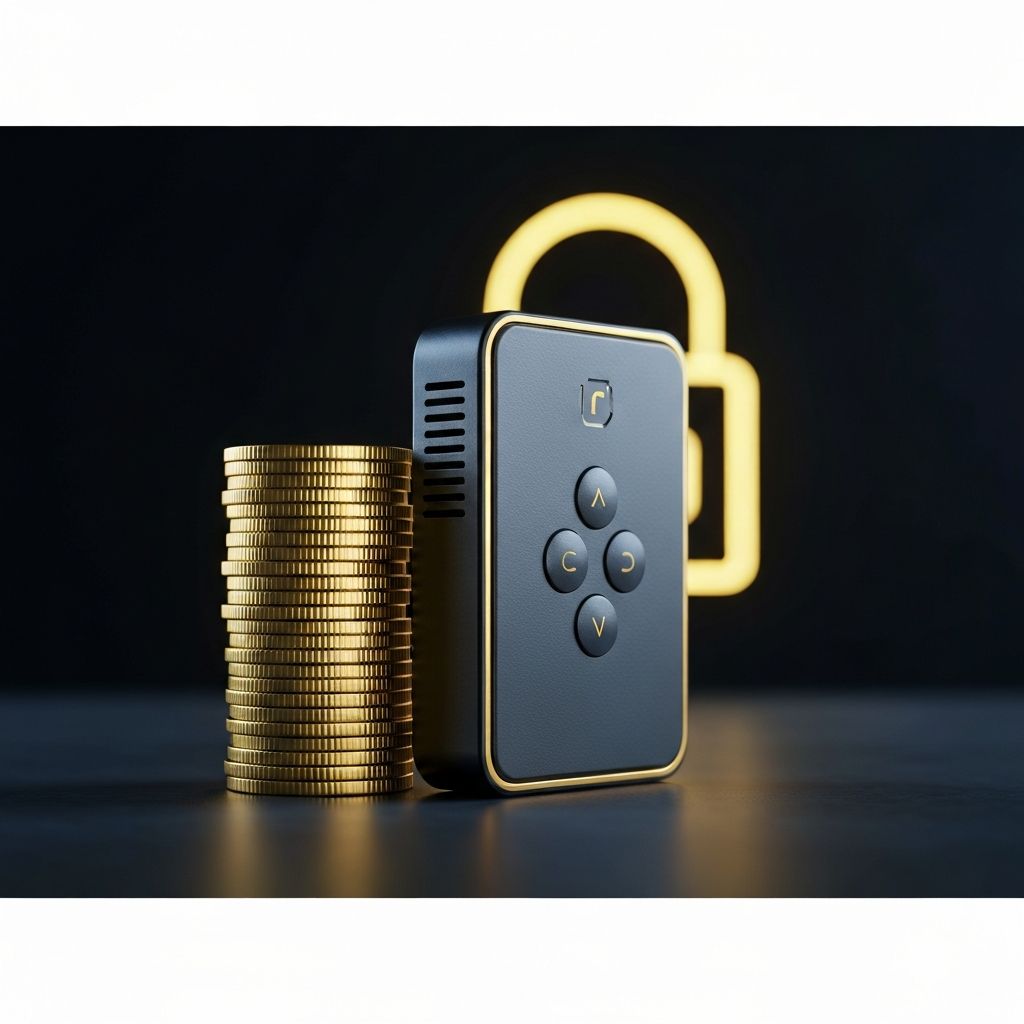
Bitcoin Wallet Types Explained
A Bitcoin wallet is software or hardware that stores your private keys and allows you to send and receive Bitcoin. Understanding the different types is essential for securing your investment.
Hardware Wallets (Cold Storage)
Hardware wallets like Ledger Nano X and Trezor Model T are physical devices that store your private keys offline. They're considered the most secure option for storing significant amounts of Bitcoin because they're immune to online hacking attempts.
Software Wallets (Hot Wallets)
Software wallets are applications for your computer or smartphone. They're convenient for daily use and smaller amounts. Popular options include Electrum (desktop), BlueWallet (mobile), and Exodus (multi-platform).
Custodial vs. Non-Custodial
Custodial wallets (exchange wallets) are managed by a third party who controls your private keys. Non-custodial wallets give you full control but require you to safely backup your seed phrase.
For a detailed comparison, visit our wallet reviews section.
Understanding Bitcoin Buying Costs
When you buy Bitcoin, several fees may apply:
Spread: The difference between the buy and sell price. Some platforms advertise "zero fees" but make money on wider spreads.
Trading Fees: A percentage of your transaction (typically 0.1% to 1.5%). Often tiered based on your trading volume.
Deposit Fees: Charges for adding funds to your account. Bank transfers are usually free; card payments cost 2-5%.
Withdrawal Fees: Fees for transferring Bitcoin to an external wallet. This covers the blockchain network fees.
To minimize costs, use bank transfers for deposits, trade on platforms with low fees like Binance or Kraken, and consolidate withdrawals to reduce network fees.
Benefits of Buying Bitcoin
Scarcity and Store of Value: With a fixed supply of 21 million coins, Bitcoin is inherently scarce. This makes it resistant to the inflationary pressures that affect traditional currencies.
Decentralization: No single entity controls Bitcoin. It operates on a global network of computers, making it resistant to censorship and government control.
24/7 Markets: Unlike traditional stock markets, Bitcoin trades around the clock, providing flexibility for investors in any time zone.
Portability: You can carry millions of dollars worth of Bitcoin on a small hardware wallet or even memorize your seed phrase for "brain wallet" storage.
Transparency: All Bitcoin transactions are recorded on the public blockchain, creating an immutable audit trail.
Growing Adoption: Major companies like Tesla, MicroStrategy, and Square hold Bitcoin. Countries like El Salvador have adopted it as legal tender. Institutional adoption continues to accelerate.
Risks and Considerations
While Bitcoin offers significant potential, it's crucial to understand the risks:
Volatility: Bitcoin's price can fluctuate dramatically - 10-20% swings in a single day are not uncommon. Only invest what you can afford to lose.
Regulatory Uncertainty: Governments worldwide are still developing cryptocurrency regulations. New laws could impact how you buy, sell, or hold Bitcoin.
Security Risks: Exchanges can be hacked, and if you lose your private keys or seed phrase, your Bitcoin is gone forever. Security is your responsibility.
Irreversible Transactions: Bitcoin transactions cannot be reversed. If you send Bitcoin to the wrong address, it's lost permanently.
Tax Implications: In most countries, Bitcoin is treated as property for tax purposes. You may owe capital gains tax when you sell or spend your Bitcoin.
Bitcoin Investment Strategies
Dollar-Cost Averaging (DCA)
Dollar-cost averaging involves buying a fixed dollar amount of Bitcoin at regular intervals (weekly, monthly) regardless of price. This strategy reduces the impact of volatility and removes the emotional stress of trying to time the market.
For example, investing $100 every week means you'll buy more Bitcoin when prices are low and less when prices are high, averaging out your cost over time.
Lump Sum Investing
If you have a large amount to invest and believe Bitcoin's long-term trajectory is upward, investing it all at once (lump sum) has historically outperformed DCA about two-thirds of the time. However, this exposes you to short-term volatility.
HODLing
HODL (a misspelling of "hold" that became a crypto meme) refers to the strategy of buying Bitcoin and holding it for the long term, ignoring short-term price fluctuations. Many early Bitcoin adopters became wealthy simply by holding through multiple market cycles.
Essential Safety Tips for Bitcoin Buyers
- Use reputable exchanges - Stick to well-known platforms with strong security records
- Enable 2FA - Use an authenticator app, not SMS
- Beware of scams - Never share your private keys or seed phrase; no legitimate service will ask for them
- Double-check addresses - Always verify wallet addresses before sending Bitcoin
- Use hardware wallets - For amounts you can't afford to lose, invest in a hardware wallet
- Backup your seed phrase - Store it offline in multiple secure locations
- Start small - Learn with small amounts before making larger investments
- Do your own research - Don't rely on social media hype or influencer recommendations
Tax Considerations
In most jurisdictions, Bitcoin is taxable. You may owe taxes when you:
Sell Bitcoin for fiat currency - Capital gains tax applies to any profit
Trade Bitcoin for other cryptocurrencies - This is typically a taxable event
Use Bitcoin to purchase goods or services - Treated as selling Bitcoin
Receive Bitcoin as payment - Taxed as income at fair market value
Keep detailed records of all your transactions, including dates, amounts, and prices. Consider using crypto tax software to simplify reporting. Consult a tax professional familiar with cryptocurrency for advice specific to your situation.
Frequently Asked Questions
Conclusion
Buying Bitcoin in 2026 is more accessible than ever, with numerous platforms competing to offer the best user experience, lowest fees, and strongest security. Whether you're investing $50 or $50,000, the fundamentals remain the same: choose a reputable exchange, enable strong security measures, and consider moving significant holdings to a personal wallet.
Remember that Bitcoin is a volatile asset and should only represent a portion of a diversified portfolio. Start with an amount you're comfortable potentially losing, educate yourself continuously, and take a long-term perspective.
Ready to get started? Check out our exchange reviews to find the best platform for your needs, or learn more about securing your investment with our wallet guides. For more cryptocurrency education, explore our comprehensive guides and crypto glossary.
